In today’s society, we find an urban setting where public gathering and inter- relation are habitually avoided.


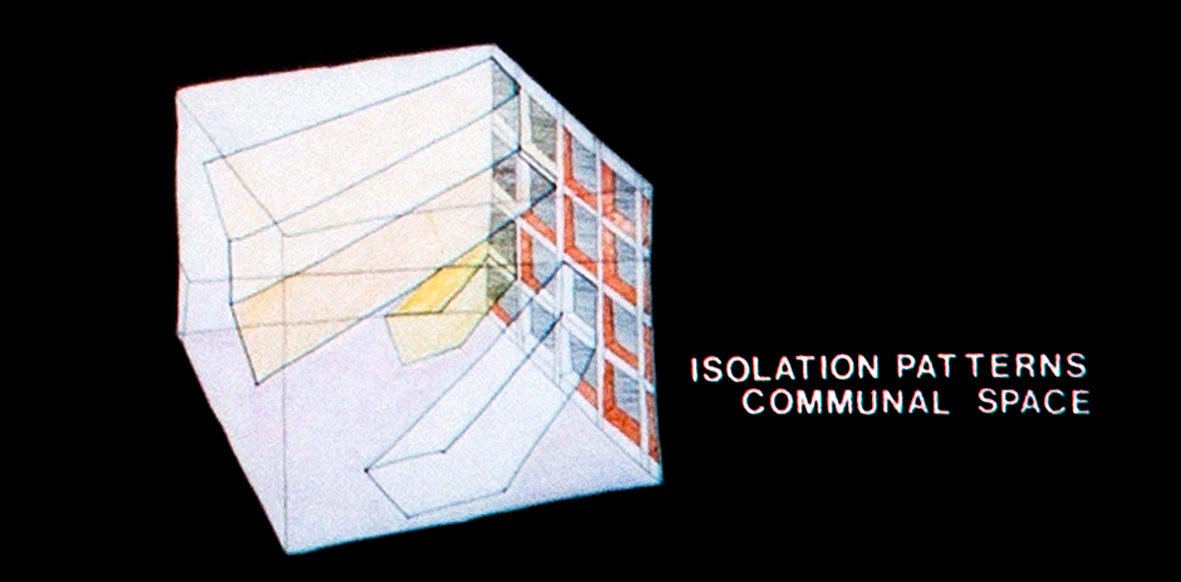
The urban environment discourages people from congregating in public spaces. Prefabrication and lack of modular coordination in the built environment result in a loss of the sense of the connection inhabitants have with a city. In order to acquire direction, people unconsciously identify with particular sites which serve as orientations to space. If there is no real identification with the built environment, then a sense of passivity and isolation occur.
This isolation results in the inhabitants’ development of a protective, “second skin” – defensive attitudes which serve as protection from the surrounding, urban environment. This “second skin” can be penetrated through the interaction and social participation which occur in communal spaces.